


APPLICATION NOTES Smart Grid
Application overview
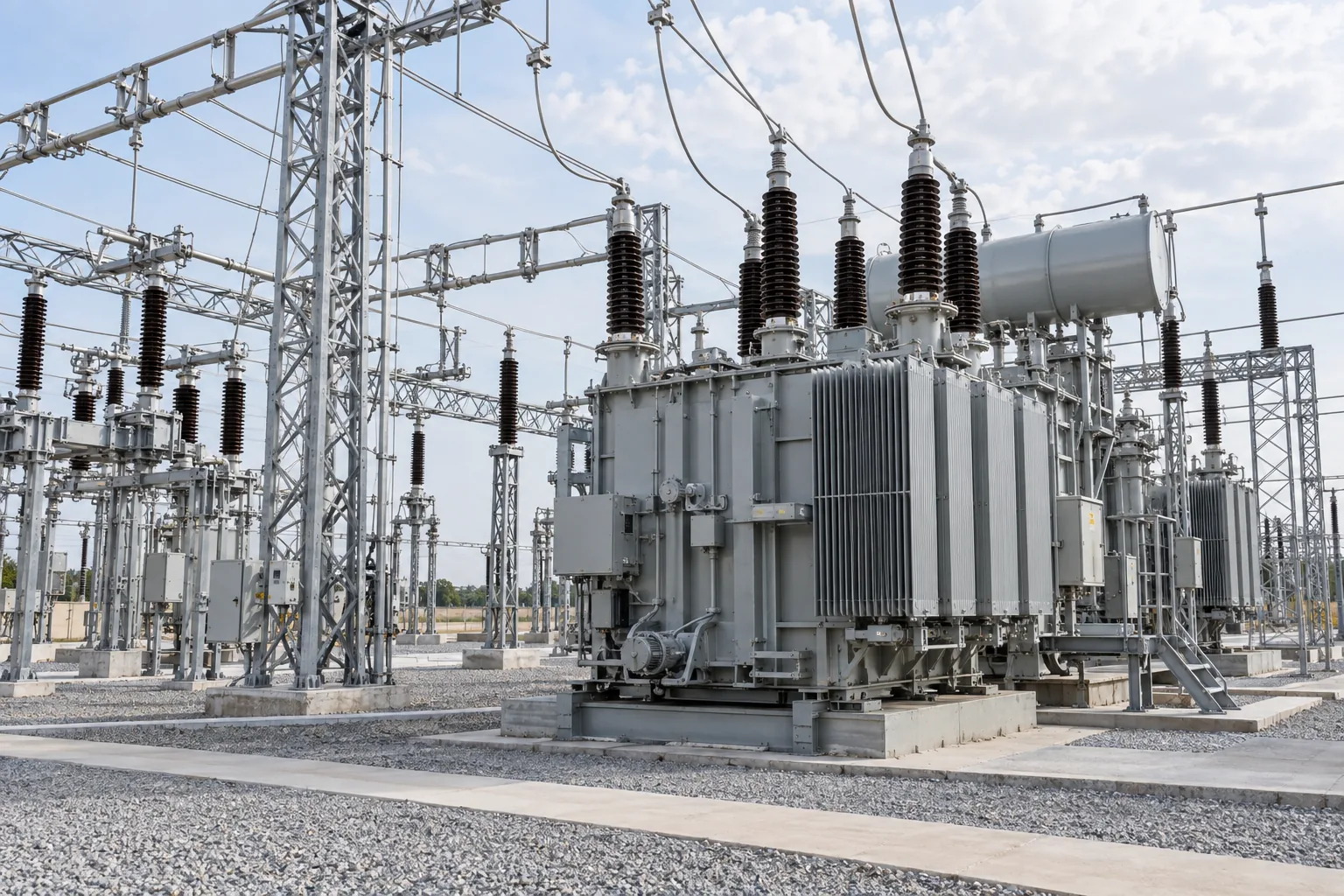
Power systems must coordinate sources, loads and protection across changing operating conditions. Renewable generation, switching events and local load changes can create short intervals where additional power support is useful. The appropriate response depends on the location of the disturbance and the existing conversion equipment. A grid-connected function, a turbine subsystem and an auxiliary control supply each require a different engineering boundary.
Supercapacitors are relevant to high-power, short-duration tasks that can be managed through a suitable interface. They should not be presented as a replacement for long-duration, large-capacity energy storage. A system intended to shift energy over hours has a different requirement from one intended to support a brief transition. Separating those objectives helps establish realistic storage capacity, converter sizing and recharge expectations before considering a product family.
Why supercapacitors fit
Fast-response buffering can be valuable when a disturbance is brief but the requested power contribution is substantial. The storage bank operates through a converter or a defined DC load, so response and regulation depend on the complete control path. Supercapacitors do not independently stabilize an AC network simply because they are connected somewhere in the installation. The target function must be specified and coordinated with the equipment responsible for power quality.
Frequent small energy exchanges may also favor a cycle-oriented storage assessment. Renewable fluctuation support, for example, needs a defined time scale and a deliberate reserve strategy. A buffer cannot keep smoothing indefinitely if it has no opportunity to recover its charge state. The analysis should distinguish short-event power support from sustained energy imbalance and should account for the operating limits of the selected bank and converter.
Typical use cases
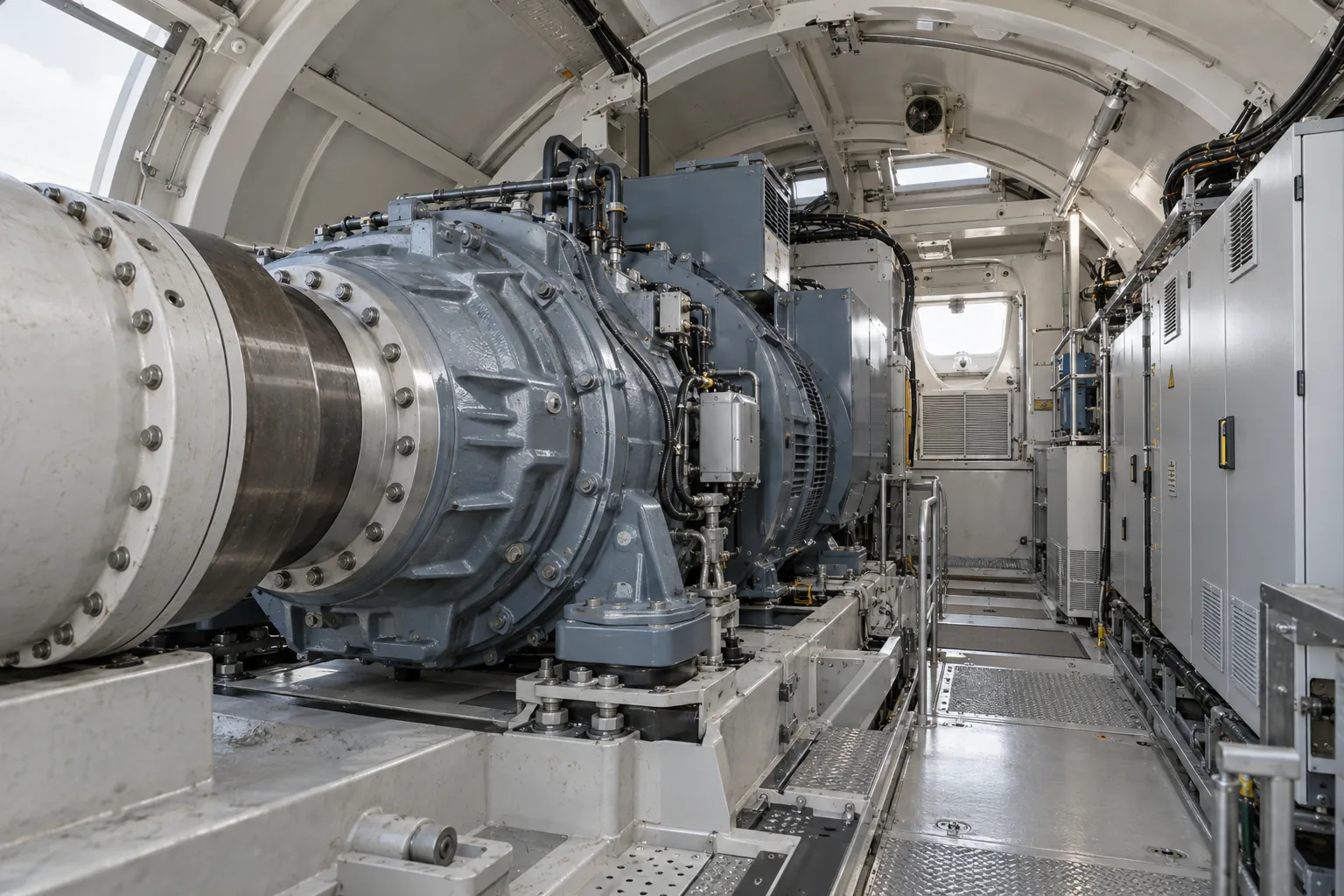
Wind pitch systems are one application direction where a dedicated energy reserve can support an actuator function during a defined event. The required movement, available voltage and control sequence must be specified by the turbine system design. Renewable integration and power smoothing are broader directions that depend on converter capability and the time scale of the fluctuation being addressed.
Voltage ride-through support, short-duration backup and control or protection functions may have more tightly bounded loads. An auxiliary bank can be evaluated for the exact interval a selected function must remain available. These examples should not be combined into a universal grid-storage specification. Each has its own power requirement, fault behavior, environmental exposure and expectation for the state of charge before an event.
- Wind pitch and selected actuator reserve functions.
- Short-timescale renewable power buffering.
- Defined voltage ride-through and transition support.
- Auxiliary control, protection and short-duration backup.
Engineering considerations
Define the system voltage, required power, event duration and minimum usable storage voltage first. For an auxiliary system, identify the load that must remain supported and the acceptable output deviation. For a converter-connected function, include control bandwidth, current limits and the recharge plan. Nominal stored energy is not a substitute for verifying that useful energy can be delivered within the permitted voltage window.
Installation conditions may include outdoor cabinets, heat, cold, condensation or restricted ventilation. Monitoring, balancing and insulation requirements depend on the bank architecture and installation voltage. Protection needs to address both the connected power system and the energy already stored in the bank. The design should define what happens when reserve is insufficient and how a bank is isolated for service. Applicable connection and equipment requirements must be reviewed by the responsible engineering team; this article does not establish compliance.
Recommended product direction
Modules are the primary direction for comparing packaged storage assemblies in cabinet-level or subsystem integration. Review the usable voltage range, interconnects, mechanical envelope and monitoring approach alongside the intended converter. A higher rated voltage does not automatically make a module suitable for a grid-connected installation or a wind turbine subsystem.
Cells can be a secondary direction for custom low-voltage auxiliary banks or engineered assemblies with a specific physical arrangement. The resulting design still requires validated balancing, protection and safe discharge provisions. The HXNext family pages are catalog starting points, not certified grid solutions. Specific references should be considered only after the system function and the relevant operating conditions have been established.
Match the storage to the event time scale
An effective evaluation distinguishes a brief power-quality event from a persistent shortage of energy. Describe the disturbance, the desired output behavior and the point at which the buffer should stop contributing or hand over to another source. Test the intended recovery and recharge sequence as well as the initial discharge. Repeated disturbances can reveal a reserve limitation that is not apparent in a single-event demonstration.
For an application discussion, provide the power interface, voltage window, event duration, repetition rate and cabinet conditions. For wind or renewable equipment, identify whether the requirement concerns an actuator, an auxiliary supply or the main power path. Those distinctions make it possible to discuss cells and modules without implying that a short-duration buffer can replace the system’s long-duration energy storage or satisfy every power-quality requirement.
Specify how readiness is established after installation and after a disturbance. A bank may need to reach a defined reserve before the supported function is considered available, and the control system must communicate that state appropriately. Identify the behavior required during maintenance, communication loss and repeated events arriving before recharge is complete. If the application involves outdoor or remote equipment, include the practical means of inspection and safe isolation as part of the evaluation brief. These details do not make the article a grid design specification; they establish the questions that should be answered by the responsible team. A realistic selection process keeps component ratings, subsystem behavior and power-system responsibilities separate until their interfaces have been validated.
Further technical reading
Supercapacitor application guidelines — Eaton Backup power and active balancing reference — Texas Instruments General engineering references, not evidence of HXNext deployment or product qualification. Scene images are generated illustrations.